Jim’s 18 Commandments of Investing

Screenshot 2023-09-06 110140

Why do you invest … hopefully to make money.

Why money … well it can help you achieve goals in life and provide you with a sense of security and freedom.

What makes some investors better than others? Sometimes it just to have a better plan.

Over the course of my career—building businesses as a tech CEO, mentoring entrepreneurs on the board of SCORE, leading a local community investment club for over 10 years, and spending tax seasons as an advanced IRS-certified volunteer tax preparer—I have seen the good, the bad, and the downright ugly sides of personal finance…


Here is my list of “Commandments” to help you achieve your goals.

Continue reading

Build Your Own Annuity

Screenshot 2022-04-08 124656

Summary

  • An annuity can provide a steady stream of reliable income during retirement
  • You can build your own annuity with benefits not available elsewhere
  • Dividends completely cover my Required Minimum Distributions and the principle continues to grow
  • Commercial annuities invest if the same types stocks and bonds you can purchase
  • Commercial annuities have substantial fees, end of life limitations and no return of capital
  • My investments include a taxable account, ROTH IRA and a IRA. This article covers my IRA “annuity”
Continue reading

BEWARE – Large Mutual Fund Taxes This Year!

Taxes

Do You Own Mutual Funds – Just Beware

This is only for people who own mutual funds in a taxable account. This year some people will get clobbered with a huge tax bill and our mutual fund is losing money. They call it adding insult to injury. If you own ETF’s instead, you don’t have this problem.

So how does this happen? It’s almost a perfect story, one you won’t like. Many mutual funds had substantial gains earlier this year, then the market started to turn south and a massive number of people sold. How do we know this, well if the mutual fund price drops 25-30% like the rest of the market, then a massive number of people sold!

The way mutual funds are designed, if people sell the fund the fund must sell the individual stocks. Let’s say it’s a US growth fund and the fund holds Facebook (META) as a major holding. You sell the fund, they in turn sell Facebook.

This year is unique, there is a huge outflow from growth mutual funds, the remaining shareholders will have to divide up the 2022 capital gains. How do you know if your fund might have this issue? Just check their turn-over ratio.

Here is an example, SHRAX, ClearBridge Aggressive Growth fund. It has an estimated $500M outflow, has lost 22% YTD. This fund has a PCGE of 87%, “potential capital gains exposure” (Barron’s).

Just to understand the math, let’s say a fund has $1M in capital gains for 2022 and there are 1,000 investors, each investor would get a 1099 – Capital Gains for $1,000. Now if so many people sell that there are only 500 shareholders, each will now get a $2,000 capital gains. You get the idea, it’s a “snowballing” effect.

What should you do:

  1. Check any mutual fund in a taxable account, what will the annual distribution be? You can call the fund.
  2. If there are any pending capital gains SELL THE MUTUAL FUND IMMEDIATELY!
  3. A better rule, don’t hold mutual funds in any taxable account! Switch to a similar fund in an ETF format. They are much more tax friendly.
  4. You might be tempted to respond, you want that “distribution”, it’s extra money right? NO, WRONG. The day of the distribution, the value of the fund goes down in price by the exact amount of any distribution!

Why are ETF’s better in a taxable account? For one, they don’t have this capital gains issue. When you sell shares in an ETF, they don’t actually “sell” the underlying shares, they have transfer arrangements with what’s called “authorized participants”. These are just large institution market makers that can offload the gains, package them with losses in other shares and eliminate any taxes to you.

Years ago I started managing my mother’s taxable investment account and it was loaded high quality mutual funds. Every year she was getting a big tax bill that was unnecessary. Over a few years we transitioned to ETF’s and the tax bills went away.

Shame on Them …… Politicians

Shame

Shame on all of them, Democrats and Republicans

OUT OF TOUCH!

We send our representative to Washington to work together to get things done for the American people. We aren’t looking for total BS and self-serving interests.

The Inflation Reduction Act has a lot of shame to go around, the final bill has a lot of benefits, in my opinion.

Democrat’s Shame:

  1. This isn’t really an “Inflation Reduction” law, it’s a climate and healthcare change and tax law. You only call it “Inflation Reduction” to get votes in November, any inflation reduction will take years at best.
  2. Senator Manchin played hardball to get concessions that will benefit his family owner coal mining business in West Virginia. When questioned, he claimed his coal business investments are in a Blind Trust. Totally not true, he has a Blind Trust but it does not include the coal business. Way to go Manchin … personal gain.
  3. Senator Sinema didn’t even beat around the bush; she wouldn’t sign on unless they kept the “carried interest” tax loophole. Private Equity are the only ones who benefit from carried interest and they contributed over $1,000,000 to her campaign. Forget about representing Arizona or the American people, this was just good old fashion greed! Carried Interest is a big rip off.
  4. The Democrats completely controlled this law and could do anything they wanted once Manchin and Sinema were on board. But, they sold out to big pharma. Yes, they will allow Medicare to negotiate drug prices, but on only 10 drugs and starting in 2026! Why not all drugs and starting immediately? Because they need the campaign contributions! bill also caps these seniors’ annual out-of-pocket prescription expenses at $2,000 a year beginning in 2025, and limits insulin co-pays to $35 starting in 2023, but just for Medicare patients. How about negotiating for all Federally funded healthcare programs? Of course not!
  5. The EV tax credits has a phase in requirement that requires all EV batteries to be produced in the US. Did you bother talking to the US car industry first? Of course not, the car industry says about 70% of US EV’s won’t qualify!
  6. Regarding the IRS auditing people under $400k/year, every Democrat voted against an amendment to restrict the IRS from increasing audits against under $400k/year people! So much for Biden’s claims, oh the IRS won’t go after middle/lower income people.

Republican’s Shame:

  1. The Republican’s were just plain against ANYTHING that would give Biden a “win”. Didn’t make any difference if was good for America or not!
  2. All but 7 Republicans voted against a $35 insulin cap for private insurance carriers! Why??? Lowering the price of insulin, which is used by diabetics to manage their blood sugar levels is probably supported by almost all Americans. This was just a plain sell-out to big pharma donations.
  3. Although not part of the “Inflation” law, the Republicans originally refused to vote for the Iraq and Afghanistan war veterans exposed to toxic burn pit. They claimed that Toomey discovered language in the bill that was a showstopper. Later we learned that that language didn’t exist and the after a public outcry the Republicans finally decided we needed to support our veterans.

Understanding a Real Oil/Gas Problem – Look at Refinery Closings

download

Summary:

  • Large numbers of refineries have closed
  • Policy-driven Global Warming have forced refineries out of business
  • No one is going to build a new refinery
  • We need a better policy-plan for the future
  • The US should be the world leader in energy of all types, including fossil fuels

Let’s look at a critical component of the overall US Oil/Gas infrastructure – refineries.

Most of you know, the price of oil, natural gas, gasoline and diesel is set by the global futures market …. NOT BY OIL COMPANIES

The futures markets have 2 types of traders, speculators and hedging. Hedging is when a chemical plant agrees to take delivery of 100,000 barrels of oil at the 1st of every month so they can keep making plastics. Hedging is a pre-purchase at guaranteed price. Nothing wrong with that!

Refineries actually buy oil too, they refine it into all the petroleum products we need, then resell it. The problem here in the US is that refiners have been closing down for years. Those that are still in existence, as private companies, what to make what is most profitable for them. Why have refiners been closing plants in the last several years? Much of it is because of pressure imposed by “Global Warming” and reducing CO2 emissions.  This is not a political statement, this is just a fact!

For example, in November 2017 Shell adopted its “scope 3” emissions targets, under pressure from both world leaders and shareholders. This resulted Shell reducing it’s carbon footprint from 54 refineries in 2004 to 8 in 2021 to a planned 5 by 2025!

Of course Shell is not alone, BP also adopted its “scope 3” emissions targets, to reduce refining by 20%, Total, the giant European oil company did the same etc. Others made additional changes, Phillips plans to convert its Rodeo refinery to biofuel, but that also reduced total output by ½, the Marathon converted its Martinez refinery, cutting capacity by more than 70%, Holly Oil converted Cheyenne reducing it by 90% and CVR did the same at their Wynnewood facility.

Now let’s look at the really big guys, Exxon and Chevron. They suffered shareholder rebellions from climate activists and disgruntled institutional investors over a strategy for a low-carbon future. BlackRock, the world’s biggest asset manager, owns a 6.7% stake in Exxon and sided with the climate guys.

Oh, and back to Shell again, in the Netherlands the green campaigners won a court battle in The Hague to force Shell to cut its carbon emissions by 45% in the next 10 years. That’s easy, just shut down capacity!

The Bottom Line

…. policy-driven refinery closures have been dramatic in recent years; but the price impacts have been masked by reduced demand from the pandemic slowdown. Furthermore, banks just don’t want to lend money to the fossil fuel industry like before. Why, because their “carbon footprint” is measured not just by the energy their building consume, but also by the CUSTOMERS FOOTPRINTS! Investors, led by Wall Street are now pushing the latest investment trend ESG (anti- fossil fuel). The banks that are heavily promoting fossil fuel … are Chinese Banks!

Solution

We need a better plan, led by the US to do both manage climate change and protect the next 50 years of fossil fuel requirements. This should be a middle of the road, bi-partisan program. The US should become the world leader in all types of Energy, including fossil fuels.

Next up – how about pipelines?

The Real Inflation Story – Part 1

mail

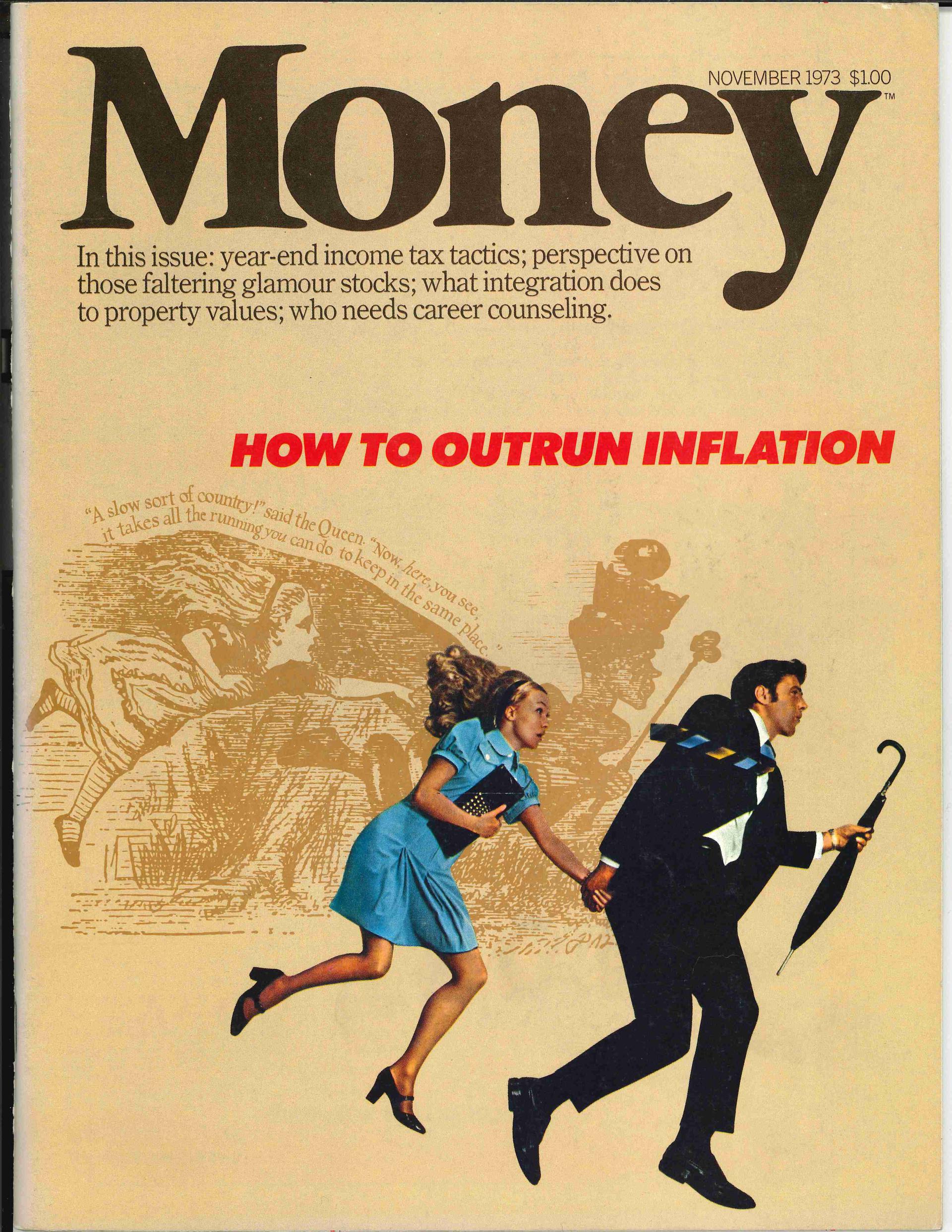
Yes, this is the cover a 1973 Money Magazine about a year after it started publishing. Easy money policies of the Fed are designed signed to generate full employment. However by the early 1970s inflation forced the Fed to raise interest rates to almost 20%! This inflation spiral lasted almost 10 years as we went into a bad recession.

Since we are a consumer driven economy, high inflation crushes our spending power, it tends to be a spiraling process. What has traditionally stopped inflation …. a RECESSION.

Here is what you should know about our current situation.

Why would we possibly have inflation? Let’s see on the Fiscal side.

  1. In April 2020 adults received $1,200 and dependents under 16 received $500 each!
  2. In January 2021 adults received $600, and dependents received $600 each.
  3. In March 2021 adults received $1,400, plus $1,400 per dependent, regardless of the dependent’s age.
  4. On top of this we added $600/week to state unemployment payments, later reduced to $300/week.

So, we had a pandemic, what was wrong with all of these payments? Mostly, these were not “needs based” payments. These were payments made by the government (adding to the whopping budget deficit) to stimulate the economy. For the most part, this was NOT to put bread on the table for most American’s. So what did America’s actually do with the money? They set up Robinhood accounts and “gambled” on crypto and meme stocks, they had their houses renovated, they bought so many cars dealers ran out. We bought so much stuff that the economy ran RED HOT! We bought so much stuff that we now have supply chain problems.

Just to clarify, there are 2 basic factors that can feed inflation., Fiscal vs Monetary policy. Monetary policy deals with the supply of money and overnight interest rates, basically the Fed. Fiscal policy is the the rest of government both spending and giving away money.

Now let’s look at the Monetary Side. 

  1. The Fed maintains for all practical purposes a 0% funds rate. Banks and large institutions can borrow short term money for free. If it’s free, why not take advantage of it, right? True but the secret is to start turning off the money spicket at the right time. Even after clear market evidence of a super strong economy the Fed has been too slow.
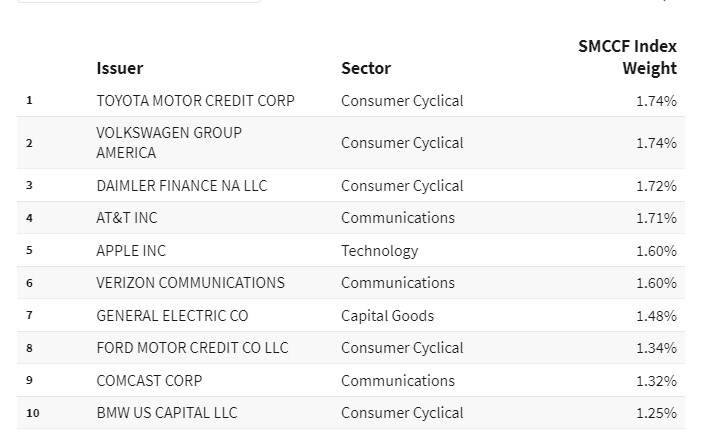
  2. More importantly, the Fed had been buying on the open market $120 billion/month, yes per MONTH of bonds and mortgages. This itself funneled a HUGE amount of money into the market. Leaving the Fed with a $9 trillion balance sheet! The Fed split these purchases up between $60 Billion bonds and $60 Billion mortgages … EVERY MONTH. Check out the corporate bonds the Fed was buying. Why do we need to buy bonds by Toyota, Volkswagen, Daimler and so on???? Tons and tons of money is being pumped into an already super heated economy.
    Screenshot 2022-01-18 141236
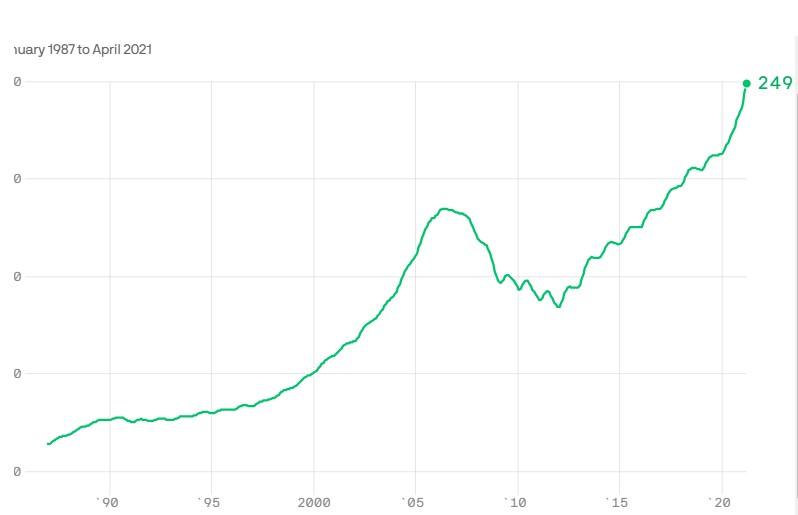
  3. Add to all of this the mortgage backed securities MDS’s the Fed buys. They buy MBS’s to keep housing rates low, well that worked too well … housing prices instead soared! housing
  4. By the time the Fed starts to “taper” all the free money, it’s too late!

So where do we go from here?

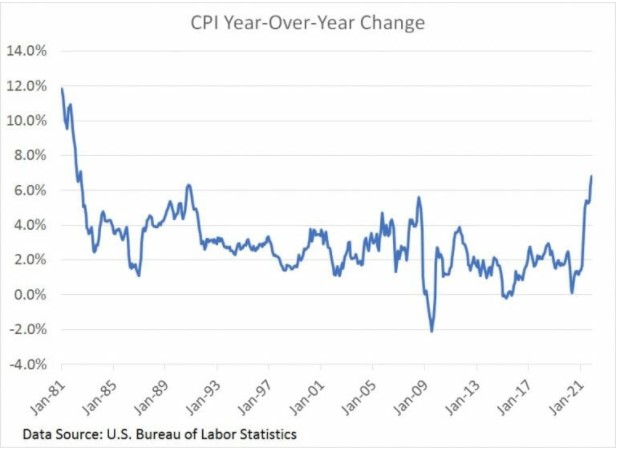
There is good and bad inflation. Good inflation might be the Fed’s arbitrary target of 2%, assuming that the economy is growing at this or a higher rate. If we have inflation at say 3% and economic growth of only 1 1/2% we are in what’s called “stagflation”. Bad inflation is when the rate exceeds our GDP growth, as we have now. We are now experiencing BAD inflation. How do you exactly know when we have real inflation? Just check out the CPI, Consumers price Index. It’s pretty clear

Inflastion

Where do we go from here, how can we get inflation under control? I’ll publish “The Real Inflation Story – Part 2” in a few days! There is a lot more pain coming unfortunately ……

Guess Who Isn’t Getting a $1,200 Check – Your College Students and Others!

students.JPG

We all know that the Economic Impact Payments will be giving us $1,200 per adult and parents get $500 for each dependent under age 17. (subject to income limits)
That leaves out anyone 18 and older, who can still be claimed as dependents on another person’s tax return.

A taxpayer is allowed to claim a full-time student between the ages of 19 and 24 as a dependent, so the parent will not get $500 for a college student, nor can the college student generally claim $1,200. Also anyone supporting adults with disabilities and elderly dependents also will not qualify for the additional $500 check!

Furthermore, the you have to have filed a tax return to get your $1,200. Many low income and senior citizens currently don’t file, they are not required to do so. The IRS is saying that they now have to file basic information to get their checks.

While on the topic of college students, I hope parents know how to get the maximum American Opportunity Credit by claiming the right “Qualified Educational Expenses” on their returns and letting the student show the most “scholarship income” on their returns

Did you change bank accounts since your last tax filing? If so the Treasury will build a web site to allow you to make this adjustment.

The IRS has a new web site dedicated to the details of the Coronavirus Tax Relief, https://www.irs.gov/coronavirus


NO RMD in 2020 – Little Known Benefit

NO RMD.JPG

Among the good and bad provisions of the massive Coronavirus Aid, Relief, and Economic Security Act or CARES Act, are waivers for your 2020 required minimum distributions (RMD). Many people don’t need this money for day to day expenses, but they have to take it anyhow. 

Who Does This Apply To?

If you have to take a RMD in 2020 from any plan. for example a 401(k) or your IRA the new law says you no longer have to take it in 2020. Also included are beneficiaries, and including those who turned age 70 1/2 in 2019 and had to take their first RMD by April 1, 2020.

Benefits and An Interesting Strategy:

  1. As we all know our 2020 RMDs were sky high. Our 2020 RMDs were based on our retirement account values on December 31, 2019, when the Dow was over 28,000, now it is around 22,000. 
  2. When you take your RMD you pay income tax on it at the ordinary income rate and it increases the amount of your Social Security that is taxable and it can roll you into a higher tax bracket for dividends and capital gains. You get NO special tax treatment for RMD.
  3. STRATEGY – since you don’t have to take an RMD, you could decide to take advantage of this situation to do a ROTH conversion. First of all, any amount converted removes those funds from your IRA, lowering the balance that will be subject to your future RMD, therefore lowers your income and tax bill for future years. Secondly, once the funds are in your Roth IRA, they will become lifetime tax free. Your Roth will also pass income tax-free to your beneficiaries. Most importantly, converting now when market values have dropped will mean that any future rebound will now accumulate tax free to you in your Roth IRA. Which is better, price appreciation of a stock in an IRA or a ROTH? ROTH!!!!!!
  4. Yes, a ROTH conversion is taxable as ordinary income, just like a RMD! However, today we may be paying mush lower taxes that we will be in future years as we pay for all of this new government spending.

download.jpg


Refinance Everything Immediately & a Fix for the China Problem

Refinance-1

Summary
Interest rates are so low that now is the time to refinance everything and deal with China! If you have any debt whatsoever refinance it now. This might be a once-in-a-lifetime opportunity.

–          Your home mortgage and all credit card debt

–          New methods for a mortgage/refinance – completely on-line

–          REFINANCE THE NATIONAL DEBT

–          Easy way to deal with China

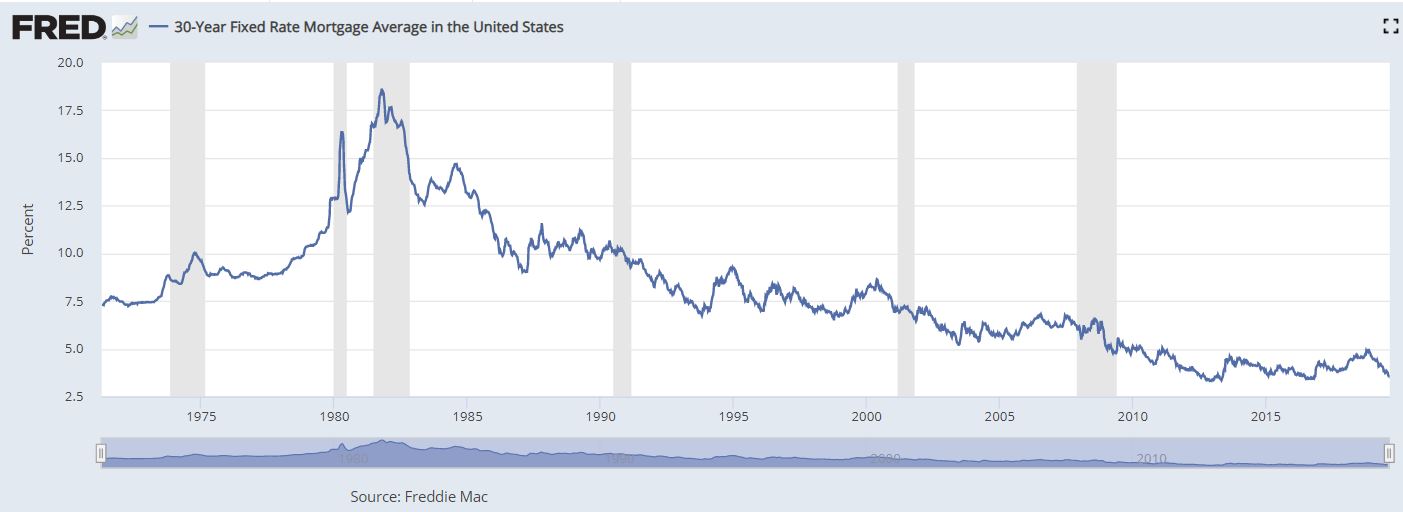
Home mortgages with interest rates 4.5% or higher should be refinanced. The outright savings can be a few hundred dollars a month. Today in Florida you can get a 3.5% refinance rate.

Take a look at the following chart:
Rates Chart.JPG

This is why I say it is a life-time opportunity. I’m 71 years old and bought my 1st house in 1972 at the age of 24, I’ve never seen a 3.5% or lower interest rate. This is historic and won’t last forever.

Now, regarding credit cards and any type of loan, including student loan balances, pay them off.  These rates, in general, do not change. If you have equity built up in your home, refinance it and take out cash to pay off all higher interest rate loans/credit cards. Make sure you keep from ever running up expensive debt. Do not use the extra cash for vacations or just buying stuff. By doing this you will make a meaningful improvement to your cash flow and financial well-being.

New Mortgage Options. There are new companies that offer complete on-line low fee refinancing, the best known is Better.com. There are no commissions and have a very efficient process. When you apply online for the 3-minute basic pre-approval, they will ask for your social security number and do a secure “soft” credit check. This doesn’t affect your credit score in any way. They use your FICO Classic 04 credit score from Transunion. Knowing your credit score helps them make more accurate calculations about how much you can afford. If you have good credit and complete all of the requirements you can lock in your mortgage rate on the SAME DAY. It pays to check their site every day, the rates can change daily. Furthermore, with this new service you can close on a refinance easily within 30 days. They actually have a notary/real estate agent come to your house to sign all of the documents. No more meeting at some title company.

The Government should REFINANCE THE NATIONAL DEBT. The US currently has about $17 trillion in public debt. Doing this could save BILLIONS A MONTH. By “taking out new low interest loans” we can pay off our current liabilities. Right now the short-term bonds/notes are roughly the same as longer-term ones.

Here is the history of 10 year Treasury Notes:10 Year Yeild Chart.JPG
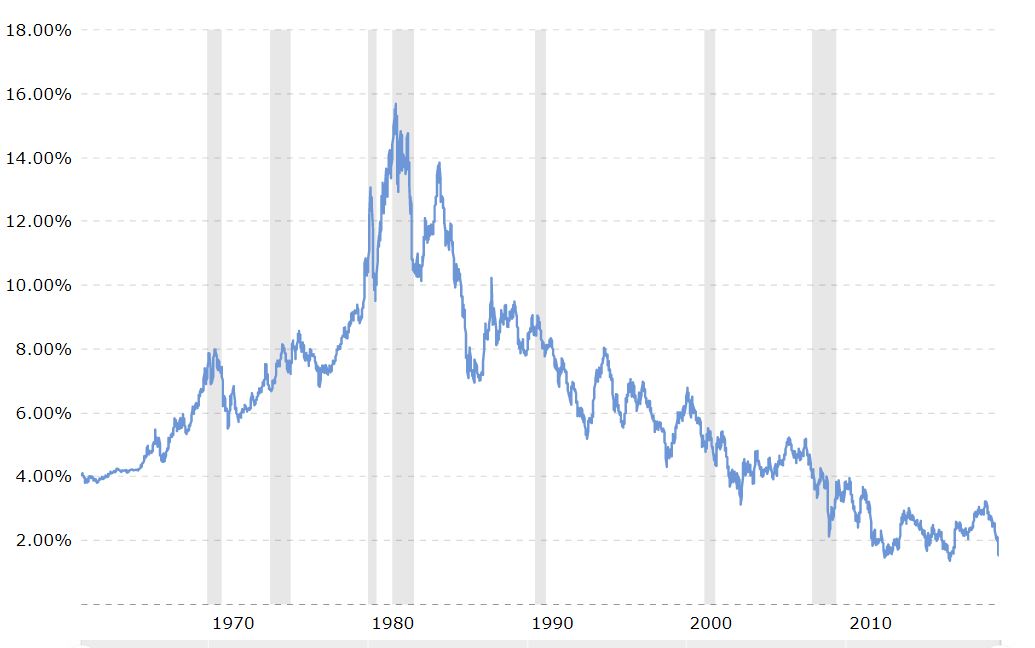
The US can issue very long dated bonds, like 50 or even 100 year bonds at low, locked in rates. Obviously, over the next 50+ years interest rates will rise again. The CBO estimates that for every percentage point reduction in interest rates the US would save about $1.7 trillion over a decade! This would be a huge debt reduction and pretty much painless to the economy.

Easy way to deal with China. There is a really easy way to deal with China, who holds the 2nd most US debt, just behind Japan. Many people are concerned because China owns over $1.11 trillion of US debt, 27% of the $4.1 trillion in Treasury bills, notes, and bonds held by foreign countries. I’m not worried at all. First of all, China cannot just demand payment, these notes/bonds have redemption terms, if it’s a 10 year note, you can have your money back in 10 years. Secondly, China can try and sell these notes/bonds on the open market, but they aren’t exactly fools. These older notes/bonds carry much higher interest rates vs today’s negative rates in most other parts of the world. Besides, China needs lots of US dollars in their foreign reserve account.

download.jpg

HERE IS A SUGGESTION TO CHINA: Hi China, we’ll be calling all of our US debt that you hold, ever bit of it. No more 2 –  5% interest payments on that $1.1 trillion dollars. In addition, since you have been such a good trading partner with the US all of these years we’ll have our Treasury Dept print up a whole new batch of bills, just for you. We will save billions in interest payments, and it won’t cost us a single penny! You can take this $1.1 trillion and go buy negative yielding German Bunds!


 

To Stretch or Not To Stretch – A Real Problem

money flying out of man's wallet

Maybe you have worked all of your life to build a nice IRA to help fund your retirement. In addition, you have set-up an estate plan and trust to make sure your non-spouse loved ones are not just well taken care of, but enjoy the most tax-efficient flexibility possible.

Watch out, congress is trying to tax your IRA sooner vs. later. They are trying to change the rules for “stretch IRA’s”. On May 23, 2019, the US House passed legislation called Setting Every Community Up for Retirement Enhancement Act of 2019, or the SECURE Act.

Example of a Stretch IRA – Current Policy
A person is 70 years old, have a Traditional IRA valued at say $700,000, currently take a RMD (Required Minimum Distribution) and name a 30 year old relative as the beneficiary on their IRA. The RMD and subsequent income for tax purposes is based on their expected remaining life.

Under current tax provisions, if the person passed away today, the 30 year old relative would set-up a new “Inherited IRA” and begin taking RMD based on a life expectancy of 53.3 years (IRS tables). The 1st years distribution will be $13,133 ($700,000/53.3), the relative only pays income on the $13,133!! The Inherited IRA benefits from investments being tax deferred for 53 years, or the RMD is “stretched” over a much longer life span while taking out a much smaller RMD.

Proposed SECURE Act – Changing the RMD to 10 Years
Under the SECURE act Uncle Sam wants to collect their taxes sooner vs later and therefore will require the Inherited IRA to be liquidated in 10 years. Therefore, the annual RMD payment would be $70,000. Now, the relative may like the idea of receiving $70,000 a year, but this will probably toss them into a much higher tax bracket and could cause other unanticipated consequences. The elimination of a “stretch” is a huge disadvantage. Keep in mind that the deceased person probably has an entire estate of other assets that will get transferred to the relative beyond just an IRA. Could your 30-something relative hand this money? 

Eliminating the stretch IRA provisions will have a significant impact on many existing trusts that have been set-up to accommodate IRA retirement plans. Many such trusts allow the trustee to control distributions to the beneficiary based on the timing of RMDs, typically for the life expectancy of the beneficiary. If the SECURE Act is passed, the trustee could be required to distribute the account during the 10-years following the IRA owner’s death, or 10 years following a minor child beneficiary reaching the age of majority, losing the benefit of holding the funds in trust.

Don’t Worry About Your Spouse
The SECURE Act really doesn’t affect your spouse provided your spouse does some pretty simple things. For spouses, not only can they receive distributions based on their life expectancy, they may also “rollover” the inherited IRA into their own IRA, possibly delaying RMDs until the spouse reaches age 70½.

Let’s make sure our law makers don’t get greedy and try to raise our taxes by removing the “stretch IRA” provision!

Caveat: I am not a financial planner and there are many other details to consider in all of these decisions. Please seek help for a tax expert, attorney or certified tax planner before making decisions.