Develop an “In Case of Emergency” Plan & Document

IMG_0097Yesterday a very nice house in our gated community was struck by lightning and exploded into flames. Fortunately the owners of the house were out of town when the lightning struck and there were no injuries. The house was totally destroyed. See the video here.

Standing there watching the firemen and the shocked neighbors I couldn’t help but wonder how protected my family would be if this had happened to our house and I was no longer around to handle all of our needs.

My New Year’s resolution this year was to fine tune our “In Case of Emergency” plan and update all of our documents. I’ll share this with you and you are welcome to download it and make the changes necessary to fit your needs.

Most Important Issues:

  1. Do you have an updated Revocable Living Trust?
  2. If not at least an updated Will. (See these issues with Wills. Also see issues with Widow taxes)
  3. Make a written 3 year financial, income, tax and expenses plan the includes the loss of income from any spouse and the effects on the family.

The “In Case of Emergency” document is a complete explanation of everything someone (like my wife, family or executor of my estate) would ever need to know about everything in my/our lives. It also includes immediate specific steps to take in case something happens to me or “us”. Keep in mind that the emergency may not be your death, but may be you becoming incapacitated, there is a difference.

It is an on-going document that is constantly being updated and enhanced. This document is stored on my computer, on a secure web site and in our safe deposit box. Every family member knows about it and understands what it is.

A “In Case of Emergency” document should include:

  1. The location and attorney involved with the creation of:
    1. Revocable Living Trust,
    2. Individual Wills,
    3. Durable Powers of Attorney, Healthcare Surrogate and other legal documents.
  2. The names, account numbers, and contacts information for all:
    1. bank accounts,
    2. investment accounts,
    3. pensions, and past/current employers
    4. Annuities, life insurance policies
    5. Also confirm the structure of each asset and in the case of IRA’s the beneficiary since these may fall outside of your Revocable Living Trust.
  3. How income is generated, what steps are necessary to keep income coming in. Budget for living income and expenses. If you are still working, who at work to contact and what benefits might a spouse of a deceased worker get, like unused vacation pay, life insurance etc.
  4. Location of safe deposit box and the location of the keys. It might be best to give multiple family members access to the box.
  5. Business owned (if applicable) with complete details on tax and ownership structure, location of stock certificates and other important documents.
  6. Birthdates, social security numbers and contact information for all family members.
  7. The location of tax records, past returns and contact information of tax preparer.
    1. If your spouse has never done taxes before explain any complicated items.
  8. Social Security information. Explain if any benefits are currently being provided and the strategy for future benefits including how to file for Survivor benefits.
  9. Your digital information including all login and passwords information, it’s best to have a software program or web site where these are stored and protected. All family members email accounts, your digital photographs, music, key documents on your computer and location of all back-ups.
    1. Best practice – stored ALL your documents on a service like DropBox that can synchronize with multiple devices. If your house goes up in flames quickly, you’ll never get your computer and back-up devices out in time.
  10. Your home information:
    1. Mortgage holder (if applicable), how payments get made, contact
    2. Account information for utilities, trash collectors, newspapers, landscaping and other service providers. How property, school and other taxes are paid
  11. Insurance information, including location of policies, account numbers, contacts, etc. Be sure to include homeowners, car, healthcare and life insurance
  12. Automobile information, including loans (if applicable), location of title, registration #’s, license plate #’s etc.
  13. List all healthcare providers like family doctors, insurance policy renewal information and an updated history of healthcare issues. Reference any Durable Powers of Attorney, Healthcare Surrogates and other healthcare information.
  14. Credit Cards, loans and other obligations. List all account numbers, and toll free numbers to call to cancel cards or pay off balances.
  15. Family cell phone accounts and structure of plans.
  16. Churches, Clubs and organizations along with contact information
  17. Neighbors and friends that should be notified with full contact information.

Finally, include a list of specific steps to immediately take in the days after an emergency.

Step #1 …………………..

Step #2 ………………….

Step #3 ………………….

You can download a copy of this Emergency Document here.


It Isn’t What It Appears To Be – NASDAQ 100

imagesThe NASDAQ 100 has is up about 284 points year to date, about 7%. However not all stocks in this index are treated equally. This index is 100 of the largest non-financial companies listed on the NASDAQ. It is a modified capitalization-weighted index.

Capitalization-weighted tends to reflect the movement of the largest companies based on “market capitalization”.

Therefore here is how the NASDAQ 100 really performed:

Amazon: 86 points – 30% of the 284 points


Google: 66 points – 23% of the 284 points


Over 50% of the entire NASDAQ rise in 2015 has been in just 2 stocks.

6 Career Lessons – They are a SCREAM!

ScreamCaution, some of these are a tiny bit naughty …. but they are really funny.

 1. Critical information. 

“A man is getting into the shower just as his wife is finishing up her shower, when the doorbell rings. The wife quickly wraps herself in a towel and runs downstairs. When she opens the door, there stands Bob, the next-door neighbor.

Before she says a word, Bob says, ‘I’ll give you $800 to drop that towel.’

After thinking for a moment, the woman drops her towel and stands naked in front of Bob. After a few seconds, Bob hands her $800 and leaves.

The woman wraps back up in the towel and goes back upstairs. When she gets to the bathroom, her husband asks, ‘ Who was that?’

‘It was Bob, the next door neighbor,’ she replies.

‘Great,’ the husband says, ‘did he say anything about the $800 he owes me?’

Moral of the story: If you share critical information pertaining to credit and risk with your shareholders in time, you may be in a position to prevent avoidable exposure.”

 2.Knowledge is power.

“A priest offered a Nun a lift. She got in and crossed her legs, forcing her gown to reveal a leg. The priest nearly had an accident. After controlling the car, he stealthily slid his hand up her leg.

The nun said, ‘Father, remember Psalm 129?’

The priest removed his hand. But, changing gears, he let his hand slide up her leg again . The nun once again said, ‘Father, remember Psalm 129?’ The priest apologized ‘Sorry sister but the flesh is weak.’

Arriving at the convent, the nun sighed heavily and went on her way.

On his arrival at the church, the priest rushed to look up Psalm 129. It said, ‘Go forth and seek, further up, you will find glory.’

Moral of the story: If you are not well informed in your job, you might miss a great opportunity.

  1. Listen to others before you speak.

A sales rep, an administration clerk, and the manager are walking to lunch when they find an antique oil lamp. They rub it and a Genie comes out. The Genie says, ‘I’ll give each of you just one wish..’

‘Me first! Me first!’ says the admin clerk. ‘I want to be in the Bahamas, driving a speedboat, without a care in the world.’ Poof! She’s gone.

‘Me next! Me next!’ says the sales rep. ‘I want to be in Hawaii , relaxing on the beach with my personal masseuse, an endless supply of Pina Coladas, and the love of my life.’ Poof! He’s gone.

‘OK, you’re up,’ the Genie says to the manager. The manager says, ‘I want those two back in the office after lunch.’

Moral of the story: Always let your boss have the first say.

4.Aim high.

An eagle was sitting on a tree resting, doing nothing. A small rabbit saw the eagle and asked him, ‘Can I also sit like you and do nothing?’

The eagle answered, ‘Sure, why not.’

So, the rabbit sat on the ground below the eagle and rested. All of a sudden, a fox appeared, jumped on the rabbit and ate it.

Moral of the story: To be sitting and doing nothing, you must be sitting very, very high up.

5. Maintaining your position.

A turkey was chatting with a bull. ‘I would love to be able to get to the top of that tree’ sighed the turkey, ‘but I haven’t got the energy.’

‘Well, why don’t you nibble on some of my droppings?’ replied the bull. It’s full of nutrients.’

The turkey pecked at a lump of dung, and found it actually gave him enough strength to reach the lowest branch of the tree.

The next day, after eating some more dung, he reached the second branch. Finally after a fourth night, the turkey was proudly perched at the top of the tree. He was promptly spotted by a farmer, who shot him out of the tree.

Moral of the story: Bull shit might get you to the top, but it won’t keep you there.

  1. When in shix…

A little bird was flying south for the winter. It was so cold the bird froze and fell to the ground into a large field. While he was lying there, a cow came by and dropped some dung on him. As the frozen bird lay there in the pile of cow dung, he began to realize how warm he was. The dung was actually thawing him out! He lay there all warm and happy, and soon began to sing for joy. A passing cat heard the bird singing and came to investigate. Following the sound, the cat discovered the bird under the pile of cow dung, and promptly dug him out and ate him.

Moral of the story:

[1] Not everyone who shixs on you is your enemy.

[2] Not everyone who gets you out of shix is your friend.

[3] And when you’re in deep shix, it’s best to keep your mouth shut!

Directly copied from: http://diply.com/omg-facts/moral-story-life-lessons-learned/158835/2

You Have a $800,000 – $1,400,000 Bond – Understanding It

StocksAs a retired investor I continually analyze my portfolio and look for ways to balance risk vs. returns. One thing that many investors might ignore in their portfolio balance is their $800,000 – $1,400,000 bond. It’s called Social Security.

Investors should value their Social Security benefits as a bond in determining their portfolio mix. I’ll give you a way to determine what your Social Security is worth. You might have decided that at your age you want a 50/50 split between equities vs. fixed income (bonds, CD’s etc.) So, how much is my Social Security really worth?

Today if you are 66 years old, plan on delating your Social Security until age 70 (which I highly recommend), have a spouse who will take “spousal benefits” at age 66 your Social Security the maximum payment you’ll get at age 70 (both spouses) is $58,600. This assumes a very modest 2% annual inflation adjustment rate.

Therefore, what size bond do you have if your annual distribution is $58,600? Well that depends on the interest rate of the bond.  Let’s look at some examples:

Annual Distribution = $58,600

Bond Rate           Value of Bond

7%                          $837,143

6%                          $976,667

5%                          $1,172,000

4%                          $1,465,000

Today a bond paying 7% is probably “junk” rates and very risky, although a few years ago these bonds could have easily been AAA+ rated.

So, my point is that if you look at your Social Security as a “bond”, in your investment mix you might decide to allocate almost all of your other investments into equities, depending on the size of your total portfolio.

My current recommendation is to stay almost 100% in equities until the Fed raises interest rates and you can get either a 30 year Gov’t bond or a AAA corporate bond at 5 -7 % and then start to ladder into a bond mix. In the meantime, stay out of bonds.

Like Safe, Stable Income – Look to Preferred Stocks

Concept for good investment and money making

As I wrote in a previous blog posting, “This Stock has been flat for 3 years – You’ll just love it!” preferred stocks can generate a very nice yield and still have a margin of safety.

Most investors don’t understand preferred stocks. Preferred stocks are positioned between common stocks and bonds. Most commonly preferred shares carry no voting rights but have a higher claim to earnings than common share and are usually less volatile than common. When the S&P 500 fell 37% in 2008, for example, the iShares preferred fund fell only 24%. Preferred shares are next in line to bond holders in the capital chain of any company. Investors can easily choose from preferred stock ETF’s or individual stocks. Investors should also understand that most high-yield stocks are affected by rising interest rates, similar to bonds.

Here are some examples of preferred investments you should consider:

  • iShares U.S. Preferred Stock ETF (PFF) 5.11% yield
  • Ladenburg Thalmann Financial Services (LTS-PA) 9.75% yield
  • Barclays Bank (BCS-PD) 7.7% yield

By allocating a portion of your portfolio to some of these ultra-high-yielding investments you’ll be able to improve your cash flow while waiting for the next Facebook or Apple investment to come along. In future posts we’ll discuss the pros and cons of these investments and some helpful tips.

Please Buy My Golf Course!!!!

GolfOK, let me just share my frustration. I bought a nice house in Florida on a beautiful golf course and the week we moved in, the golf closed. That was one year ago and the course is still not open. From my pool deck I now see weeds instead of golfers. We live in a nice gated community with a HOA that isn’t sure what to do. Some are in the hope and pray mode! Many would just like the grass cut and hedges trimmed around the club house. A few of us on a special committee are trying to be more proactive and develop plans to better control our future.

This can only be a discussion about MONEY and COMMUNITY – Not Golf! 

We are being told by the real estate agent that a mysterious (to us) buyer has an offer accepted by the bank and is in the “due diligence” process. We are suspicious because a last “deal” fell through, and this buyer has thus far made no attempt to contact the HOA or anyone in the community. If I was going to spend millions, I surely would want to talk to my potential customers before inking the contract. That’s just me and the way I think.

The golfing business just isn’t the same any more, it seems to have not recovered from the 2007 recession along with the fact there are just less golfers today than 10 years ago. However, the law of supply & demand must still work. There are well run golf courses throughout Florida, some owned by HOA’s and some by private owners. It appears the secret to success is professional management, not a bunch a golfers who think they should own a course (the previous owners).

Our HOA could potentially buy the course and then hire a top notch professional to run it. We have over 800 households in our community and the cost to buy and operate would be a fraction of the costs we’ve already suffered in home values.

The problem is that it is tough to build consensus (on almost anything, including golf). Of course the non-golfers vs the golfers is a losing battle. Only a small percentage of any community, even ours, actually play golf. The non-golfers will immediately point out that they aren’t going to subsidize the guys in pink shirts, drinking beer and cruising along paths. It appears that most of these comments come from those without lots that directly face the course. They don’t seem to express any vision for the future other than “we need to do something”, or “we hope someone buys it”.

But, as I said earlier ……. This can only be a discussion about MONEY and COMMUNITY! Our losses in property values could already buy at least a few courses. Hopefully our special committee can present a plan that solves the problem, but we can’t just rely on only the golfers.  

We have a really nice golf course for sale!


Understanding the Big Difference in Tax Lots when Selling of Stock

Let’s say that you are adjusting your portfolio allocations or trimming a position in a stock or fund you’ve been accumulating. If I want to sell, say 100 shares of my holdings in DIA, an ETF that tracks the Dow Jones Index. I can just enter the number of shares to sell, click the sell button and your sale goes through. Behind the scenes your broker might use the first in, first out method (FIFO). This simply means that the first shares purchased are also the first ones to be sold. Since each purchase you made has a cost per share at the time, your gain or loss is calculated for tax purposes.

 Now let’s say that you are looking for a special tax treatment on your sale, for example you’d like to choose between a short-term loss vs. a long term gain (let’s just assume you would never have any “Long Term Losses”. If this is the case you’ll want to make sure your broker will allow you to specify the specific tax lots that you’d like to sell. There are some years when, at year end, I’m looking to take “advantage” of some losses and dump some stocks that are no longer performing. I’ll pair these losses with selling some gains in stocks that have appreciated. I’ll buy back the stocks that had gains, but I want to take advantage of the losses. Don’t worry; this is not a “Wash Sale” since it was a gain.

 Here is an example showing various tax lots that make up a single position in an account. Notice how you can specify the exact number of shares to sell from each tax lot to control the tax consequences.

Tax Lots


Europe is on Fire (Sale) – Time to Travel

Time to visit Rome, Paris or Barcelona and save a bundle.

Rome

Monumento Nazionale – Rome

You’ve seen in my past posts how strong the US dollar has become. One major benefit is that that Europe, especially Eurozone countries are on sale. Many times we have been jealous of Asian visitors to the US because the dollar was dirt cheap, now it’s our turn. As of today, the dollar is over 30% stronger than Euro in just the last 12 months.

Here are some facts:

  1. The dollar will continue to be strong as the Fed raise interest rates
  2. The dollar will benefit from the huge glut of oil especially in the US.
  3. The Euro will weaken even more as they just start their quantitative easing.
  4. The European economy is still weak and even without foreign visitors prices will be down.
  5. European hotels are now priced a little less than American equivalent hotels, this is a major reduction.

The world just loves to see us flash those US dollars around.

How Important is the US Dollar to World Trade?

Obama Dollar


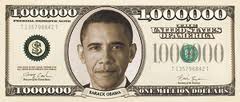
We hear the stories now and then that some people, outside the US, propose that we change the world currency from the US dollar to say the Swiss Franc, the Euro or even the Chinese Yuan. This talk usually starts after moves by our Federal Reserve to increase or decrease liquidity. The discussion is really foolish. 

The US dollar leads the world for global payments, with a 45% share in 2015, compared to the Euro at 28% and the Chinese Yuan at just 2.2%. However, the use of the Yuan in global payment currency did almost double in the last year. That is a huge increase, however still a tiny factor. 

Our strong dollar has weakened the Yuan from 6.05 Yuan to the dollar in the last year to 6.26 currently. A strong dollar lowers the price of oil since oil is priced in US dollars worldwide. A Federal rate hike in 2015 will further strengthen the dollar. Some of this will come from foreign investors who are currently getting .05% on their foreign bonds vs. our 2-3% yield on our 10 & 30 year bonds. 

A strong dollar has both plus and minuses. In general, modestly rising interest rates, low inflation and a strong dollar have historically been very good for the overall stock market.  Besides its also very nice when you travel to Europe and you get a 25% “discount”.

If you are looking for a way to invest in the strong US dollar, check out this article I wrote in December 2014. The UUP has risen 10% alone since I wrote that story.

King dollar is here to stay.


Your Basket vs. Their Index

I am a firm believer that for many people the best investment they can make in the stock market is to just buy a few low expense Index’s and let their money ride until they retire. This same advice is supported by Warren Buffet, Jack Bogle and many others.

But, for those of us that want to spend some time, do our research and try to beat the market there is another option that still offers stability and control. I call it building baskets of stocks. The problem I have with relying on an index is that you get you get the great with the terrible. Large index’s don’t have a choice, they needs a wide spread of stocks and feel comfortable holding poor performers because they primarily don’t want to take the capital losses.

I’ll give you an example of my Industrial Stocks “basket” as compared to the well known Select Sector SPDR ETF Industrials (XLI).

Stocks


Here are the holdings of the XLI at the end of January:

  1. General Electric GE 9.26%
  2. *Union Pacific UNP 5.92%
  3. *3M MMM 5.56
  4. *United Technology UTX5.27
  5. Boeing BA 5.25
  6. * Honeywell HON 4.21
  7. UPS 3.66
  8. Danaher DHR 2.95
  9. * Lockheed Martin LMT 2.79
  10. Caterpillar 2.69

The stocks shown with a “*” are also in my Industrial Basket, along with General Dynamics, FedEx and United Rental (URI). I usually classify FedEx in my “transportation basket” of stocks.

Now let’s compare:

  1. General Dynamics is up 32% in last 12 months, Danaher has barely kept pace with the S&P at 14%
  2. UPS had a huge earnings miss again in the 4th quarter, just like the 4th quarter of 2013, whereas FedEx was up 32%.
  3. General Electric was up a disappointing 1% in the last 12 months and Caterpillar was down 13%.

If you want to take the time and do a little homework you can build your own “baskets” of winners, instead of going with the index “average” performance stocks.

In future posts I’ll give you some of my other “basket” choices that also outperform the market on a consistent basis.